Workplace Health and Safety After a Flood: What Employers Should Assess Before Cleanup Begins

Flooding can turn a familiar workplace into an unfamiliar and potentially hazardous environment. Even if a building appears stable from the outside, flood water can introduce new risks that are not always visible right away.

For employers, supervisors, safety professionals, and operations leaders, the first step after a flood is not cleanup. It is assessment.

Before workers enter a flooded or previously flooded work site, employers should complete a hazard assessment and confirm that the site is safe enough for the planned work. This helps protect workers, contractors, visitors, and others who may be near the work area.

Below are key workplace health and safety hazards to consider after a flood.

1. Structural Damage and Unsafe Entry Conditions

Flooding can affect foundations, walls, floors, stairways, roofs, and other structural elements. Water damage may also create hidden openings, unstable walking surfaces, debris, or areas where workers could slip, trip, fall, or become trapped.

Before anyone enters the building, consider whether a qualified and competent person should assess the structure. In some situations, a structural engineer may be needed before re-entry or cleanup work begins.

Employers should also consider whether renovation, demolition, drying, or debris removal could further affect building integrity.

2. Electrical Hazards

Electrical hazards are a major concern after a flood. Water can damage electrical systems, energize surfaces, and create serious shock risks.

Before power is restored, electrical hazards should be identified and controlled. If work must occur in areas where standing water remains, additional controls may be required, such as using ground fault circuit interrupters when electrical equipment is necessary.

Downed power lines should always be treated as energized. Water, fences, tools, vehicles, and other objects in contact with power lines may also carry electricity.

3. Contaminated Flood Water

Flood water should be treated as contaminated unless confirmed otherwise. It may contain sewage, chemicals, biological contaminants, sharp objects, fuel, or other materials that can create health risks.

Workers should avoid direct contact with flood water and materials that have been submerged. When contact cannot be avoided, appropriate personal protective equipment may include:

  • Chemical-resistant, cut-resistant, and puncture-resistant gloves
  • Steel-toed rubber boots
  • Protective eyewear
  • Disposable or easily cleaned clothing
  • Respiratory protection where airborne hazards are present

Good hygiene practices are also important. Workers should clean hands and face before eating, drinking, smoking, or touching clean surfaces. Employers should provide a way to decontaminate workers, tools, equipment, and PPE.

4. Mould Growth

Mould can begin growing within 24 to 48 hours after materials become wet. In workplaces, mould may affect drywall, insulation, ceiling tiles, flooring, furnishings, stored materials, and HVAC components.

Exposure can irritate the eyes, skin, or respiratory tract, especially for workers with sensitivities or pre-existing health conditions.

If mould is suspected, affected materials should be assessed. Some materials may be dried and cleaned if addressed quickly and safely. Others may need to be removed and replaced. Disturbing mould-contaminated materials without proper controls can spread spores through the work area, so planning matters.

5. Asbestos-Containing Materials

Flood damage can disturb older building materials. In Canada, buildings constructed before 1990 may contain asbestos in materials such as flooring, insulation, ceiling texture, pipe insulation, drywall compound, or other products.

Asbestos cannot be confirmed by sight alone. A proper asbestos survey and sampling may be required before renovation or demolition activities begin.

When asbestos-containing materials may be present, employers should not assume the area is safe to disturb. Damaged materials should be handled according to applicable OHS requirements and accepted abatement practices.

6. Carbon Monoxide From Fuel-Powered Equipment

During flood response, workers may use generators, pumps, heaters, pressure washers, or other fuel-powered equipment. These can produce carbon monoxide, a colourless and odourless gas that may not be noticed until symptoms appear.

Signs of carbon monoxide exposure can include headache, dizziness, nausea, fainting, and impaired judgment.

Fuel-powered equipment should only be used in well-ventilated areas. Opening windows and doors can help, but ventilation should be assessed based on the equipment, space, and work conditions. Workers should also be trained to recognize symptoms and understand the controls in place.

7. Confined or Restricted Spaces

Flooding can create or change confined and restricted spaces. Examples may include basements, pits, crawlspaces, tanks, vaults, utility rooms, and areas with limited entry or exit.

These spaces can present hazards such as poor air quality, low oxygen, toxic gases, unstable structures, contaminated water, or difficulty rescuing a worker in an emergency.

Before entering these spaces, employers should conduct a hazard assessment, test air quality where required, provide ventilation, remove liquids where possible, and ensure workers are trained for the specific work.

8. Fatigue, Temperature Stress, and Mental Health

Flood response and cleanup can involve long hours, physically demanding work, disrupted routines, and emotionally difficult conditions.

Fatigue can affect concentration, judgment, coordination, and decision-making. Employers can help manage fatigue by scheduling safety-sensitive work earlier in shifts, maintaining consistent schedules where possible, and establishing regular check-ins.

Temperature stress should also be considered. Workers may face hypothermia when working in cold, wet environments or heat stress when using heaters, fans, protective clothing, or working in hot weather.

Flooding can also affect mental health. Workers may be responding to damage in their own communities or workplaces. Clear communication, access to support resources, and practical supervision can help workers cope during and after the event.

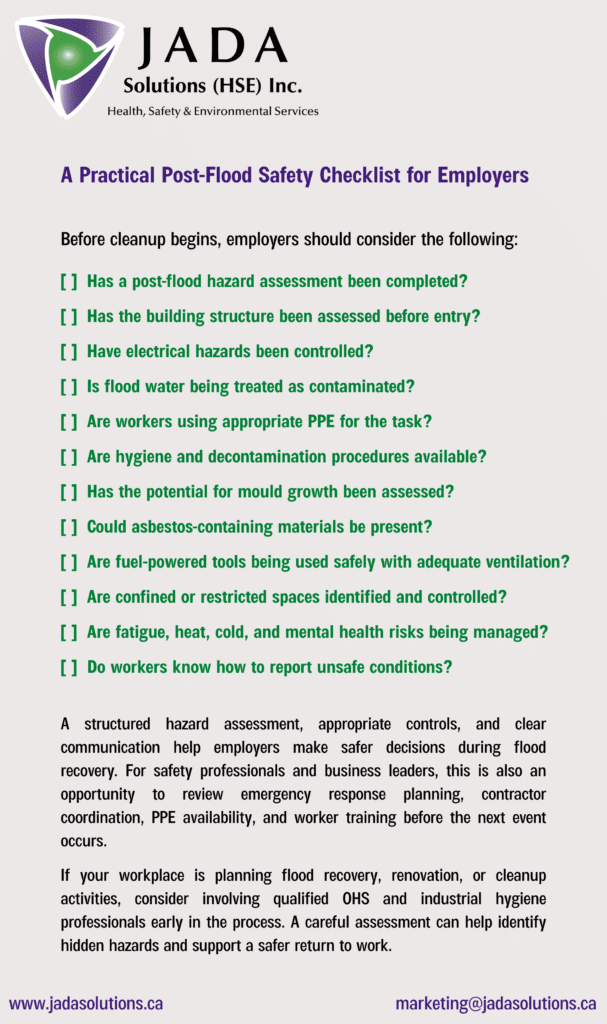
A Practical Post-Flood Safety Checklist for Employers

You can download our Post-Flood Checklist here: Post-Flood Checklist

Post-Flood Checklist

Final Thoughts

After a flood, the pressure to reopen, clean up, and return to normal can be high. However, rushing into cleanup without understanding the hazards can put workers at unnecessary risk.

A structured hazard assessment, appropriate controls, and clear communication help employers make safer decisions during flood recovery. For safety professionals and business leaders, this is also an opportunity to review emergency response planning, contractor coordination, PPE availability, and worker training before the next event occurs.

If your workplace is planning flood recovery, renovation, or cleanup activities, consider involving qualified OHS and industrial hygiene professionals early in the process. A careful assessment can help identify hidden hazards and support a safer return to work.

Leave a Reply

Reach out to our Team Today!

    How Can We Help You?

    Contact us at JADA Solutions (HSE) Inc. to speak with one of our professionals!